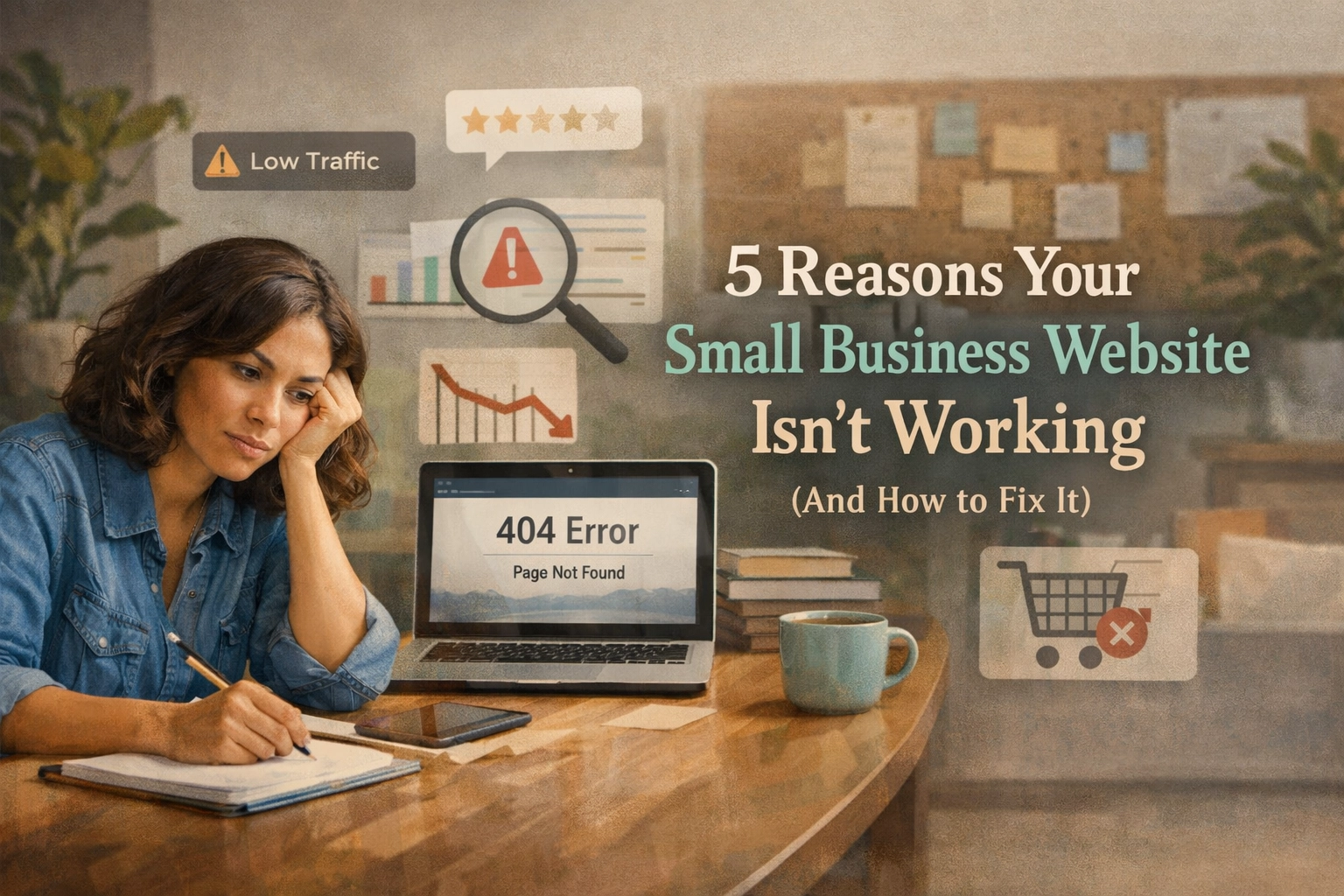
You’ve put in the hours, invested the capital, and finally launched your website. It looks okay: maybe even good: but there’s a problem: the phone isn’t ringing, the contact forms are gathering digital dust, and your analytics show people are leaving as fast as they arrive. It’s frustrating to feel like you’re shouting into the void while your competitors seem to be effortlessly picking up all the local leads.
At Smallworks Web Design, we see this all the time. Often, it isn’t one massive failure that kills a website’s performance; it’s a collection of small, friction-filled “paper cuts” that turn potential customers away. In 2026, user expectations are higher than ever. If your site feels like a relic from 2020, you’re losing money every single day.
Let’s break down the five most common reasons your small business website isn’t working and: more importantly: exactly how we can fix it.
1. Your Site is Moving at a Snail’s Pace
We live in an era of instant gratification. If your website takes more than three seconds to load, you’ve already lost half of your audience. Research shows that a single second of delay can reduce conversions by as much as 7%. When that load time creeps up to five seconds, your bounce rate skyrockets by 90%.
For a small business, speed isn’t just a technical metric; it’s a first impression. A slow site tells a visitor that you might be disorganized or out of touch. Furthermore, Google’s search algorithms in 2026 are more obsessed with “Core Web Vitals” than ever. If your site is sluggish, your local SEO services will suffer because you simply won’t show up in the rankings.
How to Fix It:
Start by running a speed test using Google PageSpeed Insights. Most of the time, the culprits are oversized images, a bloated collection of unnecessary plugins, or a low-quality hosting provider. We recommend a strict website maintenance schedule to keep your WordPress backend lean. Compressing your images and using a Content Delivery Network (CDN) can often yield up to 40% more leads just by making the experience seamless.
2. Your Messaging is Clear as Mud
You have about five seconds to answer three questions for a visitor: What do you do? How does it make my life better? And how do I buy it? If a user has to hunt through three paragraphs of “corporate speak” to figure out if you offer small business web design or just general consulting, they are going to click the back button.
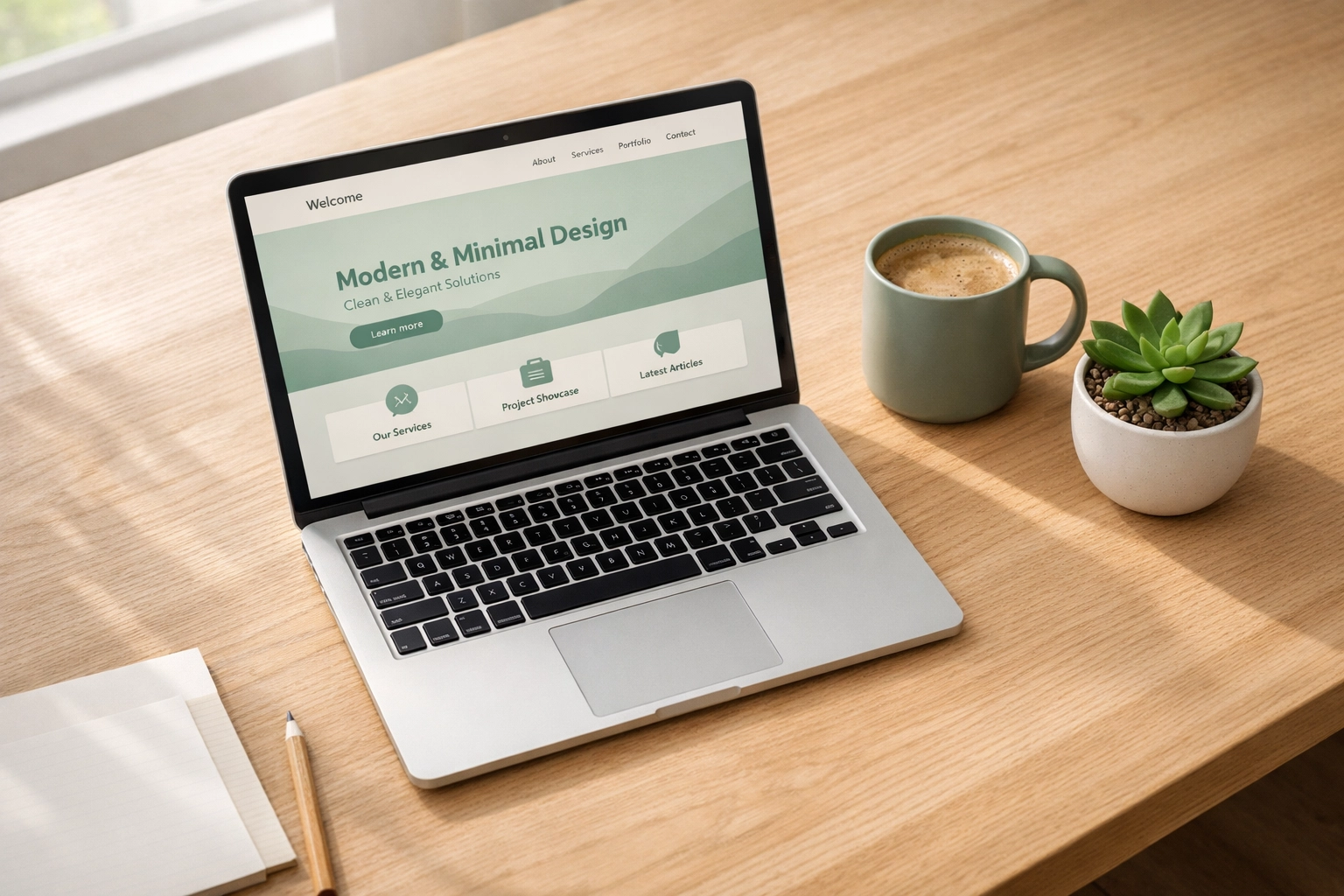
Confusing messaging is a silent killer. Many business owners try to be “clever” with their headlines instead of being “clear.” If your hero section says “Synergizing Human-Centric Solutions,” nobody knows what that means. If it says “We Build Fast, Affordable Websites for Local Plumbers,” you’ve won.
How to Fix It:
Adopt a “Text-Only Hero” or a minimalist approach. Use a bold, clear headline that identifies the problem you solve. Use a sub-headline to explain the “how,” and follow it immediately with a button. This is where WordPress website design shines: it allows you to easily swap out headlines and test what resonates with your local audience. Don’t be afraid to mention pricing or service areas directly; transparency builds trust instantly.
3. The “Paradox of Choice” is Paralyzing Your Visitors
Imagine walking into a restaurant with a 50-page menu. You’ll likely spend more time feeling stressed about what to pick than actually enjoying your meal. The same thing happens on your website when you have too many calls-to-action (CTAs). If you’re asking people to “Sign up for our newsletter,” “Follow us on Instagram,” “Read our blog,” and “Book a consultation” all on the same page, they’ll end up doing none of those things.
Pages with a single, focused goal convert 371% better than those with competing options. Your website should be a guided tour, not a choose-your-own-adventure novel.
How to Fix It:
Audit your top pages. Every page should have one primary goal. If it’s a service page, the goal is likely “Get a Quote.” If it’s your home page, the goal might be “View Our Portfolio.” Use high-contrast buttons with action-oriented language like “Start My Project” instead of generic words like “Submit” or “Click Here.” If you find your navigation menu is cluttered with fifteen items, trim it down to the essentials (about seven or fewer).

4. You’ve Ignored the “Mobile-Only” Reality
It’s no longer enough to be “mobile-friendly.” In 2026, many of your customers are “mobile-only.” They aren’t looking at your site on a 27-inch iMac; they are looking at it on a cracked iPhone screen while standing in line for coffee. If your buttons are too small to tap, or if your “Contact Us” form requires a microscope to read, you are effectively closing your doors to 60-70% of your potential market.
A poor mobile experience is the fastest way to kill your SEO services for small business. Google uses mobile-first indexing, meaning it judges your entire business based on how your site looks on a phone.
How to Fix It:
Design for the thumb. Ensure all buttons are at least 44×44 pixels. Make sure your phone number is a “click-to-call” link so customers don’t have to copy and paste it. We often suggest a website redesign if your current framework isn’t responsive, as “patching” an old mobile site is often more expensive than starting fresh with a modern, mobile-first layout.
5. You’re Lacking “Social Proof” and Trust Signals
In a world of AI-generated content and faceless corporations, people buy from people they trust. If your website doesn’t show faces, real reviews, or local projects, you look like a “ghost” business. A lack of reviews or outdated testimonials from 2019 tells the visitor that either you aren’t busy or you don’t care about your digital presence.
Reviews aren’t just for ego: they are SEO fuel. Google loves seeing fresh, localized feedback, and it helps you show up in the “Map Pack” for local searches.
How to Fix It:
Integrate your Google Reviews directly into your site. Don’t just bury them on a “Testimonials” page; put them on your home page and your service pages. Use “Micro-interactions”: small animations or hover effects: to make these reviews feel dynamic and engaging. If you have a portfolio, keep it updated with recent work. Showing that you are active in your community is one of the strongest web design services we can offer to help bridge the trust gap.

The “Fix-It” List: Where to Start?
You don’t always need to tear everything down and start from scratch. Sometimes, a series of strategic repairs can breathe new life into an underperforming site. Here is a quick checklist to get you moving:
- Audit Your Speed: Use free tools to see where the bloat is.
- Check Your Links: Broken links are a major turn-off for both users and search engines.
- Simplify the Design: Embrace the 2026 trend of minimalist layouts and dark mode options. Less is almost always more.
- Update Your Info: Ensure your address, phone number, and hours are correct everywhere.
- Ask for Feedback: Have a friend try to “buy” something or “contact” you on their phone while you watch. You’ll be surprised where they get stuck.
Leveraging AI Workflows in 2026
One of the biggest reasons small business sites fall behind is that the owner is simply too busy to update them. This is where AI workflows come in. In 2026, we use AI to help streamline content updates, generate SEO-friendly meta-descriptions, and even audit your copy for clarity. You don’t have to be a tech genius to have a high-performing site; you just need the right systems in place.
Whether you need a full WordPress website design or just some help with your local SEO services, the goal is the same: turning your website into a 24/7 marketing machine that actually works while you sleep.
Your website should be your best salesperson, not your biggest headache. If you feel like your current site is holding you back, it might be time to stop tweaking the edges and look at the foundation. A site that is fast, clear, mobile-optimized, and trusted is a site that grows your business.
Ready to see what’s actually going on under the hood of your website? Contact Smallworks Web Design today, and let’s turn that “ghost town” website into a lead-generating powerhouse.