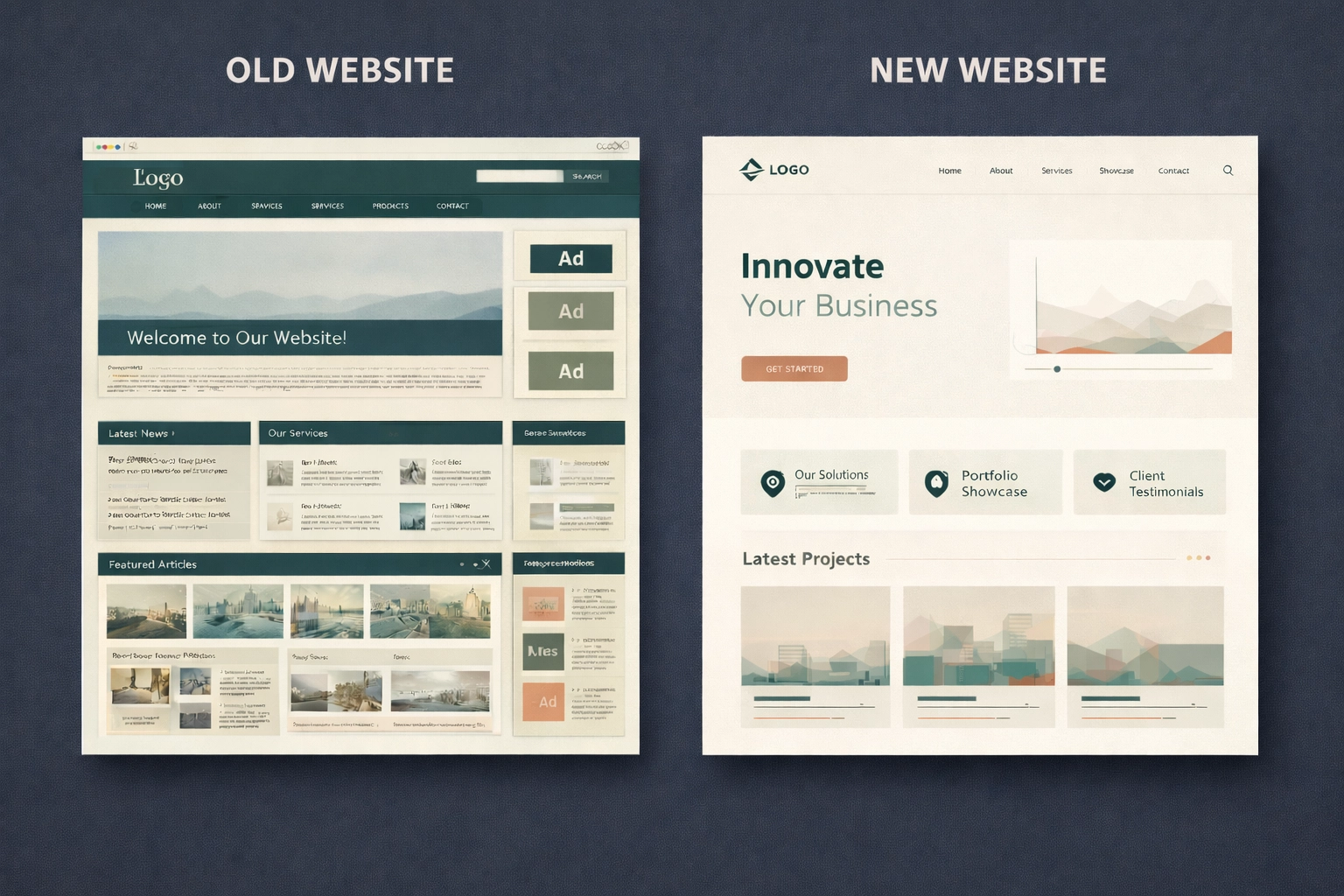
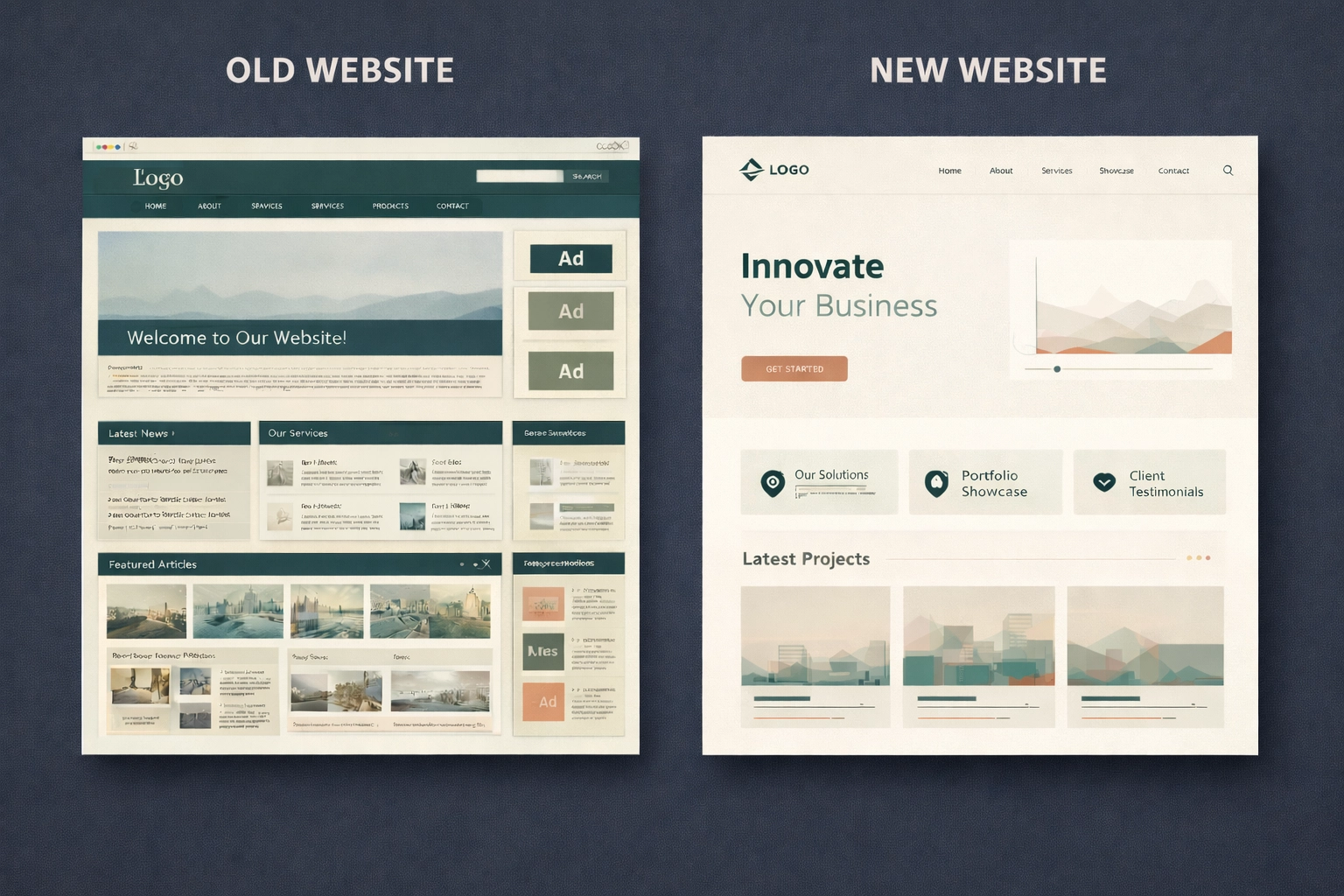
Let me guess, you’ve been staring at your website for months now, cringing every time a potential customer lands on it. The design feels stuck in 2015, it’s slower than dial-up, and you’re pretty sure it’s scaring away more business than it’s bringing in.
But then you get a quote for a website redesign and your stomach drops. Five figures? Maybe more? And what if you spend all that money and nothing changes?
Here’s the truth nobody wants to tell you: a website redesign isn’t always worth it. But when it is worth it, it can completely transform your business.
Let me break down exactly when a redesign makes financial sense, and when you’re throwing money at the wrong problem.
The ROI Reality Check (No Sugarcoating)
First, the good news: website redesigns can deliver serious returns when done right. We’re talking real, measurable results:
- E-commerce businesses typically see a 22% jump in online revenue after a strategic redesign[1]
- B2B companies pull in 35% more qualified leads within the first year[1]
- Service-based businesses improve their contact form completions by about 18%[1]
Even better? For every dollar you invest in user experience improvements, you can expect around $100 in return. That’s a 10,000% ROI according to Forrester research[3][4].
Now here’s the part where I give you the tough love: you won’t see those results overnight.
Most businesses hit break-even somewhere between 8–14 months after launch. Full ROI realization? That’s an 18–24 month commitment[1]. Peak performance doesn’t show up until you’re 12–18 months down the road[1].
If you’re expecting to launch a new site on Monday and triple your leads by Friday, we need to have a different conversation.
What You’re Actually Paying For
Let’s talk numbers because I’m not going to blow smoke about this being cheap.
For a small business web design project, you’re looking at somewhere between $15,000–$50,000 depending on complexity[1]. That might sound like a lot (because it is a lot), but here’s what you’re actually getting:
- A website that doesn’t make mobile users want to throw their phones
- Page speeds that keep Google happy and visitors engaged
- A user experience that guides people toward actually doing something (like calling you or buying your stuff)
- Modern security and accessibility compliance
- SEO foundations that help you get found
If you’ve got a larger site with 150+ pages, expect that number to climb to $36,000–$75,000[3]. Enterprise-level? We’re talking six figures minimum.
These costs have jumped about 25% in the past two years thanks to AI integration, advanced personalization features, and accessibility requirements[1]. The web design industry isn’t getting cheaper, it’s getting more sophisticated.
When a Redesign Is Absolutely Worth It
Okay, so when should you pull the trigger on a website redesign?
If you’re seeing any of these warning signs, it’s time:
- Your bounce rate is embarrassing. People land on your homepage and immediately hit the back button. That’s not a traffic problem, that’s a website problem.
- Mobile users are getting a terrible experience. More than half your traffic comes from phones, and your site looks like hot garbage on a 6-inch screen. Mobile conversion improvements after a redesign often exceed 30–40%[1].
- Your competitors’ websites make yours look ancient. Perception matters. If your site screams “we haven’t updated since Obama’s first term,” potential customers assume your business operates the same way.
- You’re losing rankings in Google. Your SEO has tanked because Google’s algorithm has evolved and your site hasn’t. Page speed, mobile-friendliness, and user experience are all ranking factors now.
- Your conversion rate is stuck. You’re getting traffic but nobody’s filling out your contact form, calling, or buying. A good redesign typically delivers 15–25% conversion rate improvements within six months[1].
When a Redesign Is Absolutely NOT Worth It
Here’s where the tough love really kicks in.
Don’t redesign if:
- Your real problem is that you never post content or update your site
- You’re not willing to track and measure results for at least a year
- You have zero traffic to begin with (you need marketing, not a prettier website)
- You’re expecting the redesign to magically solve poor customer service or product quality issues
- You haven’t identified what specifically is broken on your current site
I can’t tell you how many times I’ve seen businesses drop $50,000 on a gorgeous new website only to realize their actual problem was a $5,000 content strategy issue[1].
A redesign won’t fix bad products. It won’t compensate for terrible customer service. And it definitely won’t generate traffic if nobody knows you exist.
The Metrics That Actually Matter
If you’re serious about making a website redesign pay off, you need to track the right stuff before you start:
Baseline metrics to document:
- Current conversion rate (how many visitors become leads/customers)
- Average order value or deal size
- Organic traffic numbers
- Page load speeds
- Bounce rate by device type
- Where people are dropping off in your funnel
Then, 12 months after launch, compare those numbers. That’s how you know if it worked.
The businesses that get the best ROI from redesigns are the ones who go in with their eyes open. They know their numbers, they’ve identified specific problems, and they’re committed to measuring results.
The Bottom Line
Is your website redesign worth it? It depends.
If your site is actively hurting your business, driving away mobile users, failing to convert visitors, or tanking in search results, then yes, a strategic redesign can deliver incredible returns.
But if you’re just bored with how it looks, or you think a prettier homepage will magically solve deeper business problems, save your money.
The best website redesigns happen when you:
- Know exactly what’s broken and why
- Have baseline data to measure against
- Commit to the 18–24 month timeline for full ROI
- Focus on user experience and conversion optimization, not just aesthetics
- Partner with web design services that understand small business needs

Your website should be a 24/7 revenue generator, not a digital brochure gathering dust. If it’s not doing that job right now, it might be time for a serious conversation about what needs to change.
Want to figure out if a redesign actually makes sense for your business? Let’s talk. I’ll give you an honest assessment: even if that means telling you to hold off and fix something else first.
Because here in Round Rock, we believe in doing what’s right for your business, not just what puts money in our pocket.