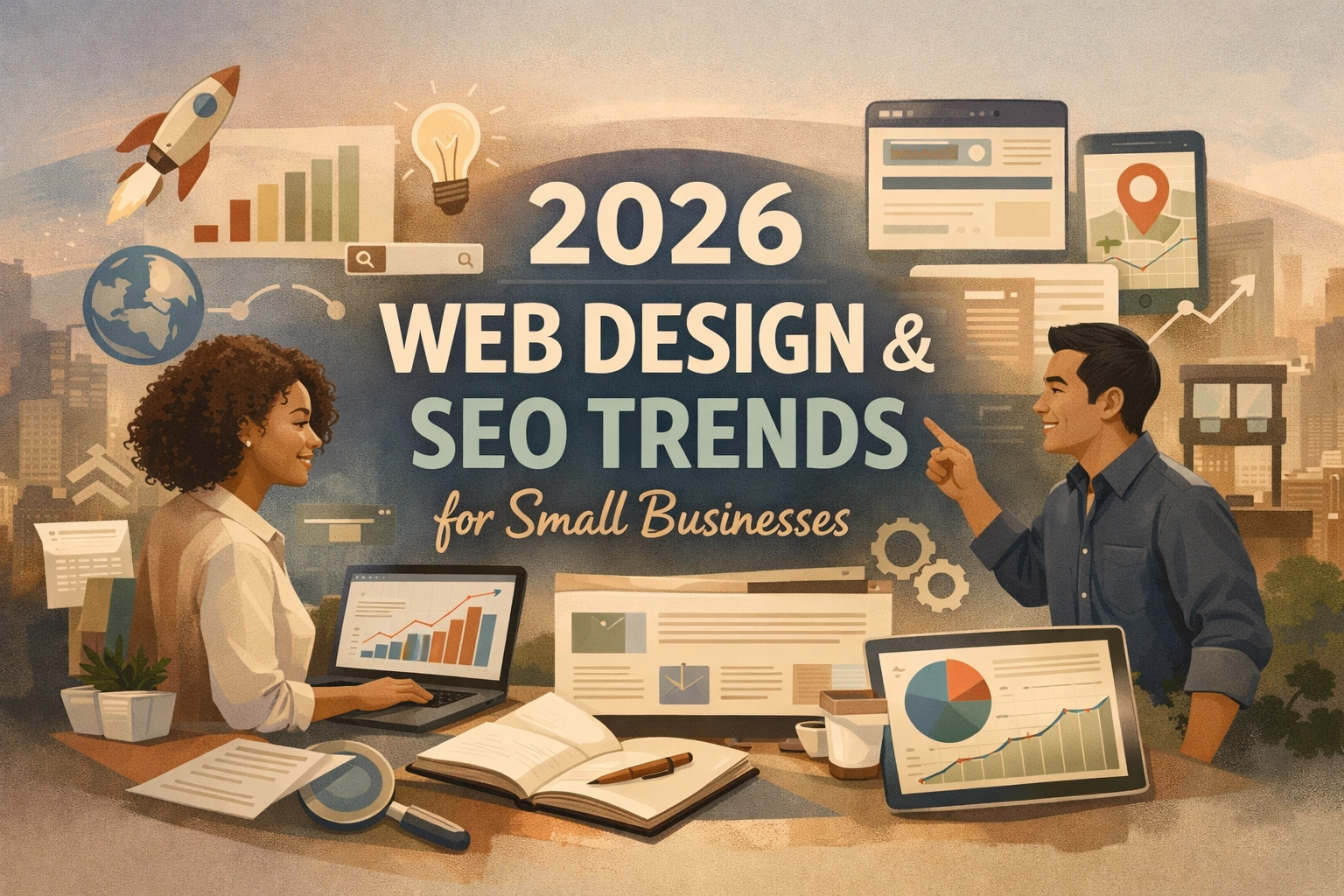
Your website isn’t just sitting on the internet anymore, it’s competing for attention in a landscape that’s changed drastically in the last year alone. If your site still looks and functions like it did in 2023, you’re already behind. But here’s the good news: catching up doesn’t mean starting from scratch.
The trends shaping web design and SEO services for small business in 2026 aren’t about flashy gimmicks. They’re about creating faster, smarter, and more intuitive experiences that actually convert visitors into customers. Let’s break down what’s working right now and how you can use these insights to strengthen your online presence.
AI Is Your New Website Assistant
Artificial intelligence isn’t just for tech giants anymore. Small business web design has been transformed by AI tools that handle everything from content updates to personalized user experiences. Think of AI as a tireless assistant that learns what your visitors want and adjusts your site accordingly.

Here’s what that looks like in practice: When someone visits your site for the first time browsing plumbing services, AI can prioritize emergency repair information. When they return, it might highlight your maintenance plans instead. This kind of personalization used to require expensive custom development, now it’s built into modern WordPress website design platforms.
For website maintenance, AI workflows can flag broken links, optimize images automatically, and even suggest content updates based on what’s trending in your industry. You’re not replacing human oversight, you’re amplifying what you can accomplish with limited time and resources.
Personalization at Scale: Making Every Visitor Feel Seen
Your customers don’t want a generic experience. They want to feel like your website understands their specific needs. That’s where personalization comes in, and it’s no longer optional for competitive small businesses.
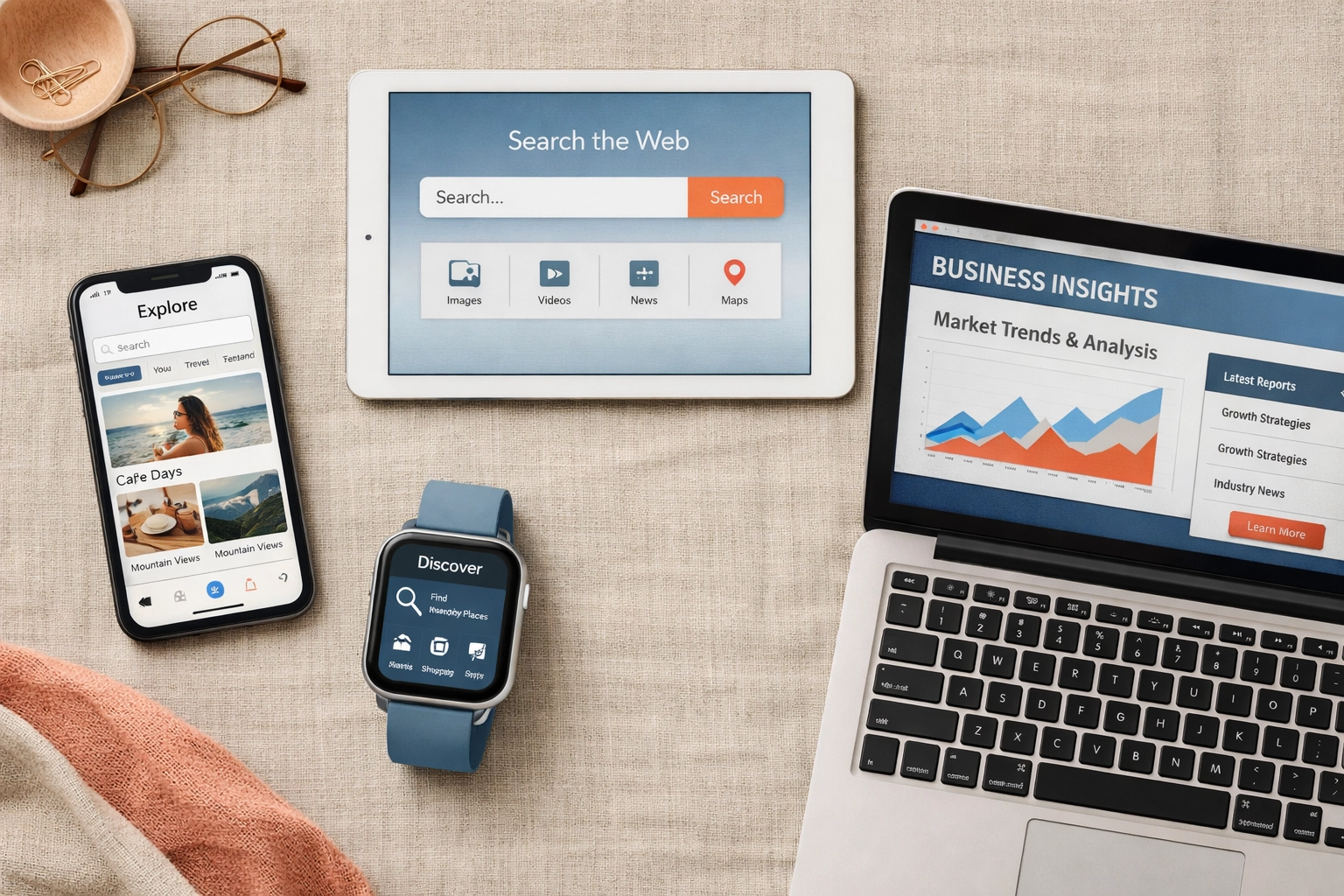
Modern websites dynamically adjust their layouts, calls-to-action, and even navigation based on visitor behavior. Someone clicking through from a Google search about “affordable web design services” sees different messaging than someone who found you through a local business directory. Both visitors get relevant information faster, which means they’re more likely to reach out.
The beauty of personalization in 2026 is that it compounds over time. The more data your site collects about visitor preferences, the better it gets at predicting what people need. This directly impacts your conversion rates without requiring you to manually create dozens of landing pages.
Search Everywhere Optimization: Beyond Google
Here’s a reality check: Local SEO services can’t just focus on Google anymore. Your potential customers are searching on TikTok, asking ChatGPT for recommendations, and checking YouTube for tutorials. If your business only shows up in traditional search results, you’re invisible to a huge portion of your audience.
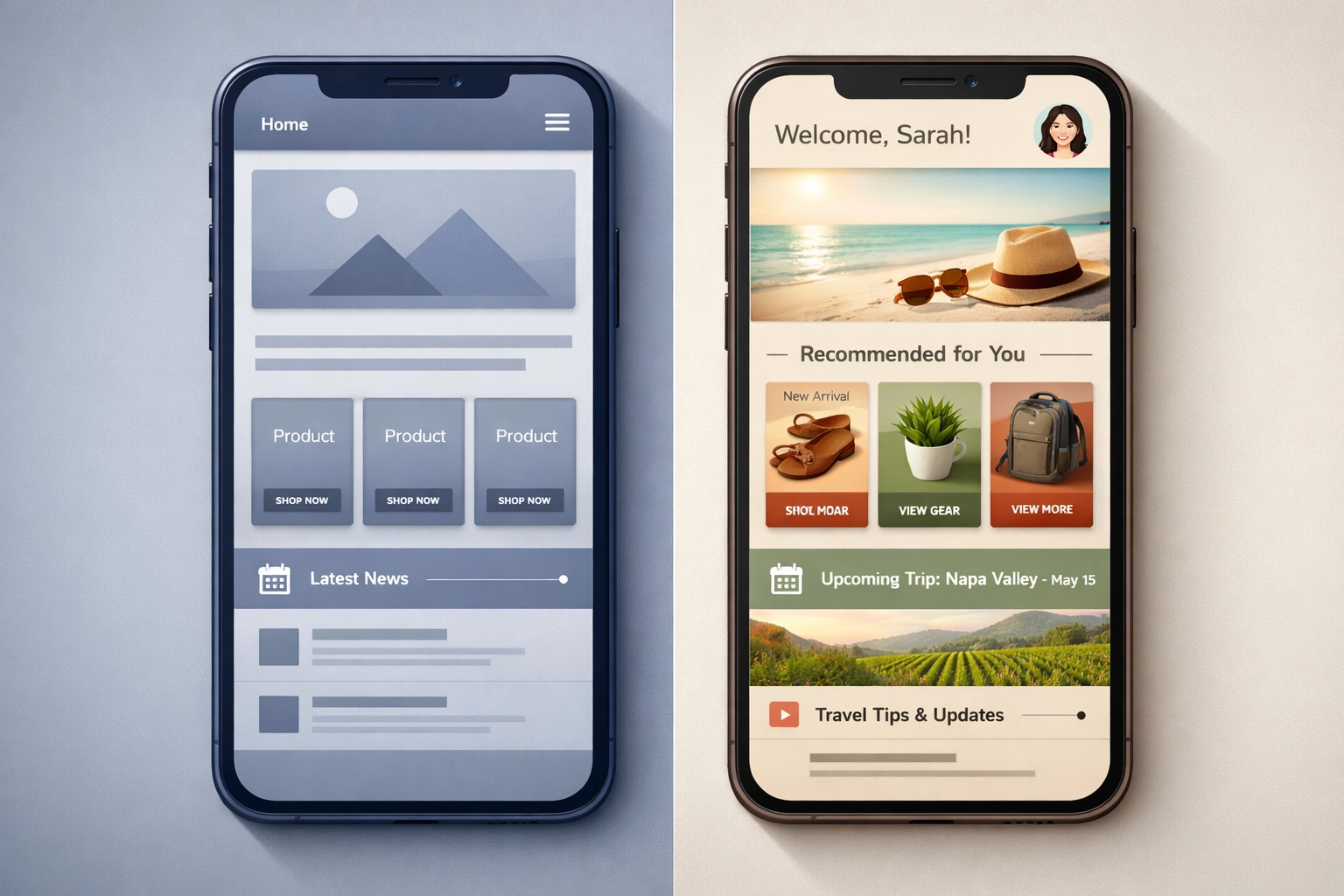
This shift means your content strategy needs to expand. Short-form video, podcast appearances, and AI-friendly content formatting all contribute to your overall visibility. The good news? You don’t need to be everywhere at once. Start by identifying where your specific customers are searching, then optimize for those platforms first.
For local businesses, this also means claiming and optimizing profiles on every relevant directory and review platform. These act as additional doorways to your website, each one contributing to your overall search presence.
Reviews as SEO Fuel: Turning Feedback Into Rankings
Customer reviews aren’t just social proof anymore, they’re legitimate ranking factors. Search engines are getting better at understanding the sentiment and context within reviews, using them to assess your business’s credibility and relevance.
Every positive review mentioning your services adds keyword-rich content to your online presence. When someone writes “Smallworks helped redesign our outdated website and our leads doubled,” that’s natural language that matches how real people search. This is why consistent review generation should be part of your website maintenance strategy, not just a one-time campaign.
The technical side matters too: structured data markup helps search engines understand and display your reviews in search results, increasing your click-through rates. If you’re not actively collecting and showcasing reviews on your site, you’re leaving ranking power on the table.
Visual Trends: Dark Mode and Meaningful Minimalism
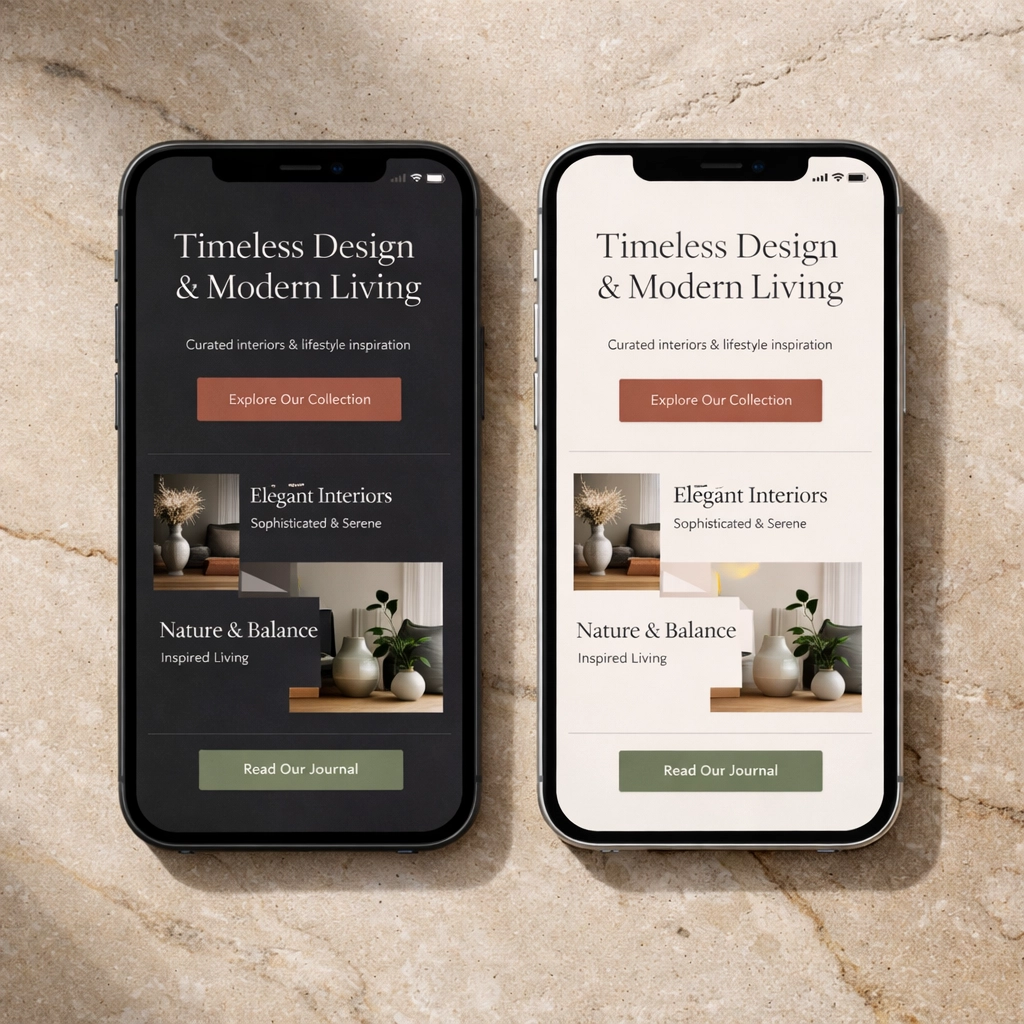
The aesthetic of web design in 2026 leans heavily into two directions: dark mode options and purposeful minimalism. Dark mode isn’t just trendy, it reduces eye strain and looks sophisticated, particularly for service-based businesses wanting to convey professionalism.
But minimalism has evolved beyond just removing elements. It’s about intentional design where every element serves a purpose. Generous whitespace, clear typography, and focused messaging help visitors find information faster while improving your site’s performance. Fast-loading pages rank better, period.
This approach especially benefits small business web design because it’s inherently mobile-friendly and easier to maintain. Fewer design elements mean fewer things that can break or look awkward on different screen sizes.
Micro-Interactions: The Small Details That Drive Action
Micro-interactions are those subtle animations and feedback elements that make websites feel responsive and human. A button that slightly enlarges when you hover over it. A form field that shakes gently when you miss a required entry. These tiny moments of interaction build trust and guide visitors toward taking action.
For small businesses, micro-interactions improve conversion rates by removing friction from the user experience. When your contact form provides instant feedback that information was submitted successfully, visitors feel confident they’ve been heard. When a product photo zooms slightly on hover, it creates a sense of interactivity that static images can’t match.
The key is restraint. Overdone animations slow down your site and annoy users. Well-placed micro-interactions enhance usability without drawing attention to themselves.
Text-Only Hero Sections: When Simple Messaging Wins
Here’s a controversial take that’s gaining traction: sometimes your homepage hero section doesn’t need a stunning image at all. Text-only heroes with strong, benefit-driven messaging can outperform image-heavy designs, particularly for service businesses where clarity trumps visual appeal.

Think about it. When someone lands on your site, they need to understand what you do and why it matters within seconds. A simple headline like “Website Redesign That Actually Brings You Customers” with a clear call-to-action can be more effective than a generic stock photo of a handshake or laptop.
This approach also solves the mobile-first challenge. Large hero images often cause slow load times on mobile devices, hurting both user experience and search rankings. Text loads instantly, making your message immediately accessible regardless of connection speed.
Mobile-First Is Non-Negotiable
If your website wasn’t designed with mobile as the primary consideration, you’re actively losing customers. The majority of your visitors are on phones, and search engines prioritize sites that deliver excellent mobile experiences.
Mobile-first design means starting with the smallest screen size and building up, ensuring thumb-friendly navigation and lightning-fast load times. This isn’t just about responsive design anymore, it’s about fundamentally rethinking how information is structured and accessed.
For local SEO services, mobile optimization directly impacts your visibility in “near me” searches. When someone’s looking for a service while standing in their driveway, they’re not going to wait for a slow site to load. They’ll hit the back button and call your competitor instead.
Is Your Website Outdated? Five Warning Signs
Not sure if you need a website redesign? Here are the red flags:
1. Your site takes more than 3 seconds to load. Every additional second kills your conversion rate.
2. Text is difficult to read on mobile devices. Pinching and zooming means immediate abandonment.
3. Your design screams 2019. Outdated aesthetics communicate that your business isn’t current.
4. Contact forms don’t work properly. You’re literally losing leads without knowing it.
5. You can’t easily update content yourself. Modern WordPress website design should empower you, not require developer help for every small change.
Any of these sound familiar? You might not need a complete overhaul, sometimes a focused refresh addresses the critical issues without starting from zero.
The Fix-It List: Quick Wins Before a Full Redesign
Before investing in a complete website redesign, tackle these high-impact improvements:
- Optimize image file sizes to improve load speed instantly
- Add clear calls-to-action on every important page
- Update your contact information everywhere, nothing kills trust like a disconnected phone number
- Install SSL certificate if you haven’t already (yes, it still matters)
- Fix broken links that create dead ends and hurt SEO
- Ensure mobile navigation works smoothly without requiring precision tapping
These fixes often deliver immediate improvements in both user experience and search rankings. Think of them as website maintenance that compounds over time rather than one-time tasks.
Web Accessibility: Inclusive Design Isn’t Optional
Building accessible websites isn’t just about legal compliance: it’s about reaching more customers. When your site works for people using screen readers, keyboard navigation, or other assistive technologies, you’re expanding your potential audience while improving usability for everyone.
Accessibility improvements often overlap with good SEO services for small business practices. Proper heading structures, descriptive alt text for images, and clear link text all help search engines understand your content while making your site more usable.
The business case is simple: accessible websites typically have better engagement metrics, which search engines reward with higher rankings. It’s a win-win that shouldn’t be ignored in 2026.
Privacy-First Design: Building Trust Through Transparency
With increasing data privacy regulations and growing consumer awareness, how you handle visitor data directly impacts trust and conversions. Privacy-first design means clear consent dialogs, transparent data policies, and giving visitors actual control over their information.
This isn’t just about compliance: it’s about competitive advantage. When visitors trust that you respect their privacy, they’re more likely to engage with your site and share their contact information. In contrast, aggressive tracking and unclear policies create friction that drives people away.
Modern web design services should build privacy considerations into every aspect of your site, from cookie banners to contact forms. Done well, privacy features actually improve the user experience rather than detracting from it.
The trends shaping small business web design in 2026 all point toward the same goal: creating faster, smarter, more user-focused experiences that convert visitors into customers. Whether you’re planning a complete website redesign or just looking to improve what you’ve got, focusing on these fundamentals will strengthen your online presence and improve your search visibility.
Your website should work as hard as you do. If it’s not pulling its weight, let’s talk about fixing that.