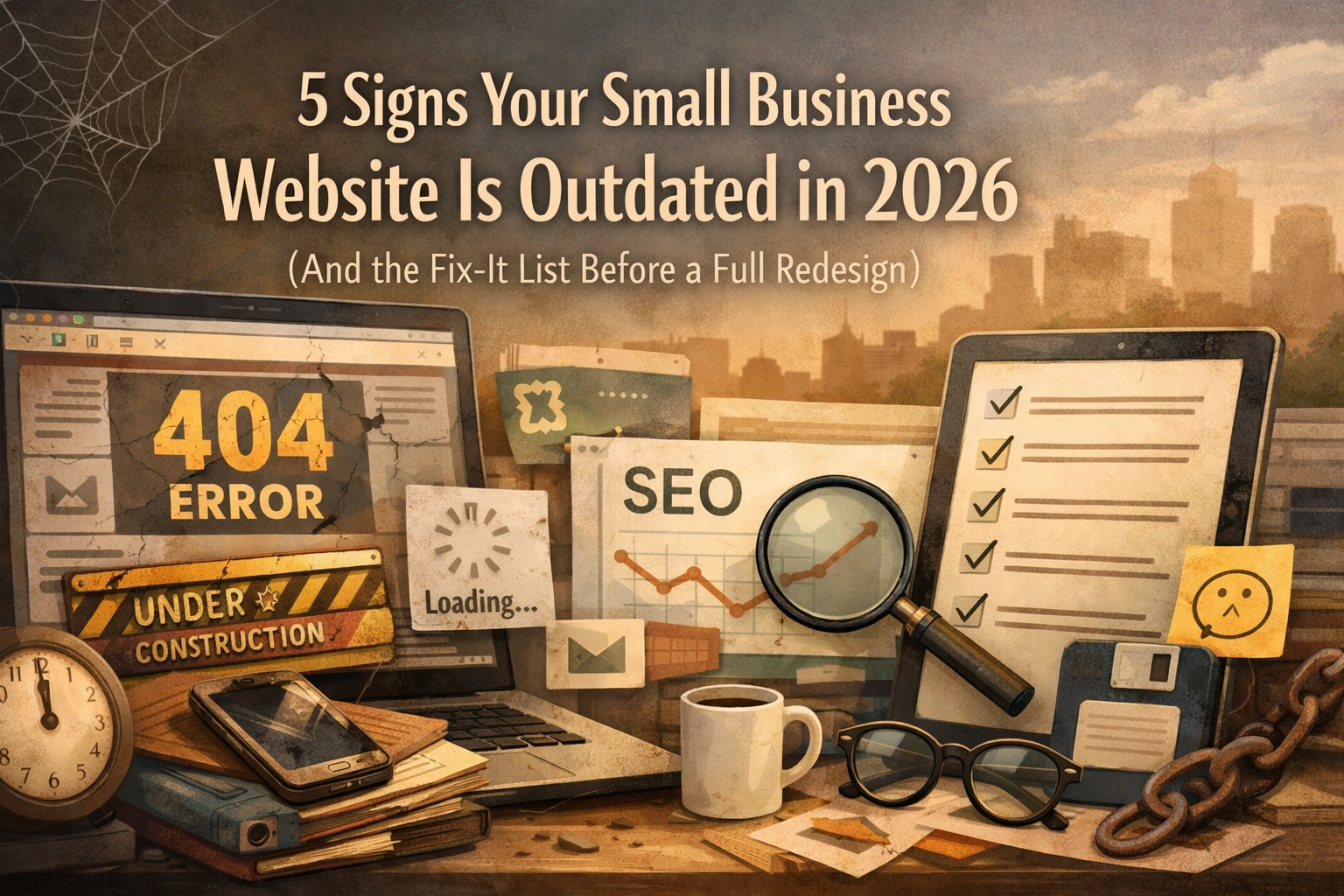
You’ve probably felt that nagging sensation when you look at your own website: a slight cringe, or a quick urge to close the tab before anyone else sees it. It’s that feeling that your digital storefront is starting to look like a dusty relic in a world that’s moving at light speed. In 2026, the digital landscape doesn’t just change every few years; it shifts every few months.
A website that worked perfectly in 2022 is likely struggling to keep up today. If you’ve noticed your inquiries dropping or your search rankings slipping, it might not be your product or service that’s the problem: it might be your “24/7 salesperson” falling asleep on the job.
At Smallworks Web Design, we see this all the time. Small business owners are busy running their companies, and the website often becomes an afterthought until something breaks. But your website is often the very first interaction a potential customer has with your brand. If that interaction feels clunky, outdated, or confusing, you’re basically shouting into the void while your competitors are whispering directly into your customers’ ears.
Let’s look at the five undeniable signs that your site is showing its age, and more importantly, how we can tune it up before you commit to a full website redesign.
1. It Doesn’t Feel “Mobile-Only”
We’ve moved past the era of “mobile-friendly” or even “mobile-first.” In 2026, for many local industries, we are firmly in a mobile-only reality. If your website feels like a shrunk-down version of your desktop site, you’re losing people instantly.
Think about how you browse the web today. You’re likely on a phone, probably using one thumb, and looking for a quick answer. If your buttons are too small to tap, or if your navigation menu requires a degree in engineering to figure out, visitors will bounce faster than you can say “lost lead.” An outdated site often fails on modern screens: like foldables or ultra-wide mobile displays: making your professional business look amateur.

Designing for mobile speed isn’t just about how fast the images load; it’s about how quickly a user can complete an action. If your small business web design hasn’t been updated to accommodate thumb-friendly micro-interactions, you’re making your customers work too hard.
2. Your Visuals Are Stuck in the “Flashy” Era
Visual trends in 2026 have moved toward extreme minimalism and high-contrast functionality. If your site is still using massive, generic stock photos of people shaking hands in a boardroom, or “carousel” sliders that nobody actually waits to watch, you’re dating yourself.
Current 2026 visual trends favor dark mode options and minimalist layouts. Many modern sites are even moving toward text-only hero sections. Why? Because messaging is king. When a visitor lands on your site, they want to know exactly what you do and how you can help them: without having to navigate through a sea of distracting, high-definition (and slow-loading) background videos.
If your site doesn’t offer a clean, airy aesthetic that respects the user’s eyes, it’s time to look into our website-design philosophy. A modern site should feel like a breath of fresh air, not a cluttered bulletin board.
3. You’re Only Optimizing for Google
If your entire SEO strategy is still just about “keywords on a page for Google,” you’re missing half the party. In 2026, we talk about Search Everywhere Optimization. People are searching via AI assistants, TikTok, Pinterest, and even directly inside maps.
An outdated website usually lacks the structured data and “searchable” content formats that these new platforms require. Furthermore, are you using reviews as SEO fuel? In 2026, your customer feedback is a living part of your search presence. If your site isn’t automatically pulling in and highlighting fresh, verified reviews, you’re missing out on the primary way small businesses win at local SEO services.
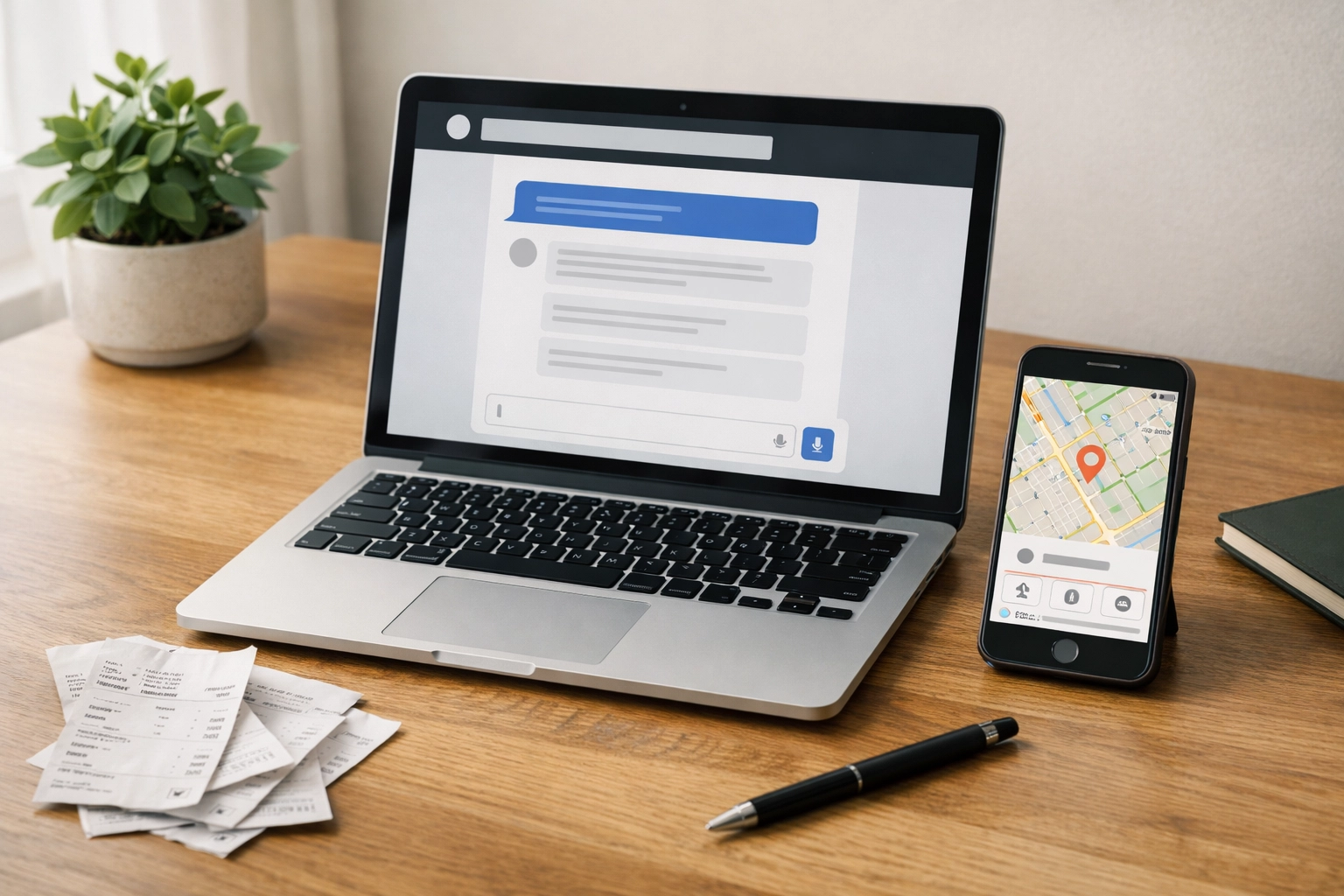
Trust is the currency of the modern web. If your site doesn’t clearly display social proof or if it feels disconnected from the platforms where your customers actually spend their time, it’s going to feel like a ghost town.
4. Updating Content Feels Like a Chore
Does the thought of changing a price or adding a new blog post make you want to pull your hair out? If you’re still wrestling with legacy page builders that break every time WordPress updates, your site is technically outdated.
In 2026, we use AI workflows for small biz to streamline these updates. Modern WordPress website design allows for “headless” or block-based editing that makes content management feel like typing in a Word document, not coding a rocket ship. If your site is a mess of “broken shortcodes” and “plugin update required” warnings, your website maintenance has fallen behind.
An outdated backend usually means an outdated frontend. When it’s hard to update your site, you stop doing it. Then, your “2024 Holiday Special” is still sitting on the homepage in February 2026: and nothing screams “we don’t care” louder than stale content.
5. It Lacks “Personalization at Scale”
The biggest shift in the last two years has been the expectation of a tailored user experience. A generic website that shows the exact same thing to every single person is becoming a thing of the past.
Modern web design uses subtle cues to offer personalization at scale. This could be as simple as showing a different hero message to a returning visitor versus a first-time guest, or displaying local-specific content based on where the user is browsing from. If your site feels static and “one-size-fits-all,” it lacks the persuasive power needed to convert modern users.

The “Fix-It” List Before a Full Redesign
You might not need to tear everything down and start from scratch just yet. Sometimes, a few strategic repairs can buy you another year of high performance. Here is your 2026 “Fix-It” list to tackle before committing to a full website-redesign:
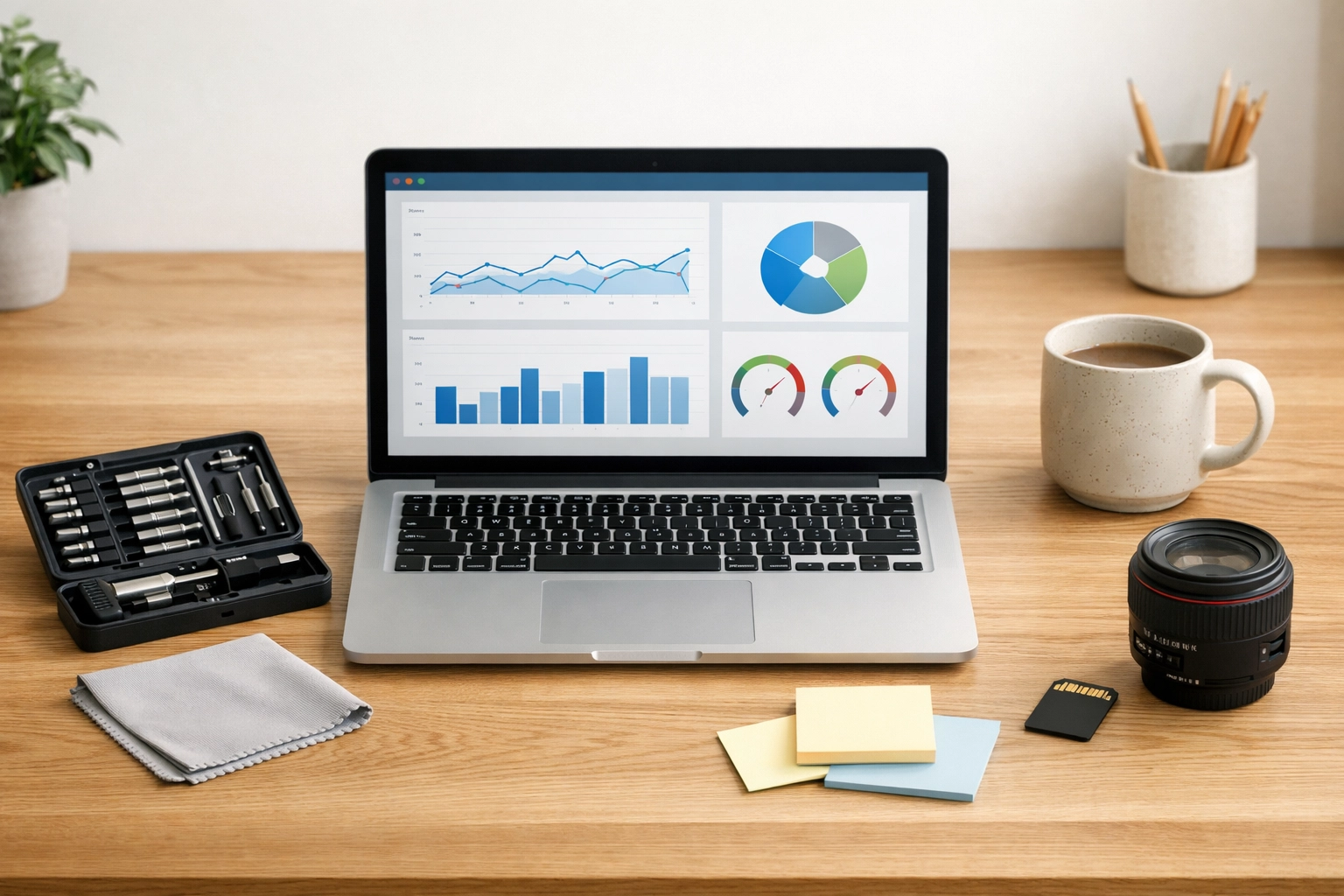
- Audit Your Speed: Use tools to see if your images are huge. Simply compressing your photos and implementing a modern caching system can make an old site feel brand new.
- Fix Your Micro-interactions: Ensure buttons change color when hovered or tapped, and that form submissions provide a clear “thank you” message. These tiny details enhance conversion rates significantly.
- Refresh the Messaging: Replace your “Welcome to our website” headline with a text-only hero section that states exactly what problem you solve.
- Accessibility Check: Web accessibility 101 is now a legal and ethical necessity. Ensure your contrast ratios are high and your site is navigable by screen readers. This isn’t just for compliance; it’s for better SEO and reach.
- Privacy-First Updates: Update your privacy-policy and cookie banners. Building trust through data security is a major brand-builder in 2026.
- Clean Up the Footer: Make sure your contact information is correct and that you have links to your portfolio and blog.
Why Maintenance Matters
Think of your website like a car. You can have a beautiful 2026 model, but if you never change the oil or check the tires, it’s going to break down on the highway. Our website maintenance services are designed to keep small business sites running smoothly so you don’t wake up one morning to a “Site Not Found” error.
If you’ve gone through the “Signs” list and realized your site hits three or four of them, a “Fix-It” list might just be a bandage on a larger problem. Cumulative patches can eventually cost more in time and lost revenue than doing it right the first time.
Building a Bridge to Your Future Customers
Your website should be a bridge, not a barrier. If your current site is making it harder for people to hire you, it’s time for a change. Whether it’s implementing better SEO services for small business or a complete visual overhaul, the goal is always the same: making your business the obvious choice for your local community.
At Smallworks Web Design, Steven and the team specialize in taking that “stale” feeling and turning it into a high-performing digital asset. We don’t just build sites that look good; we build sites that work: for you and for your customers.
If you’re curious about how your current site stacks up, check out our about page to see how we approach design, or take a look at our services to see how we can help you get back on track.
The digital world isn’t slowing down. Don’t let your business get left behind in the “dust” of 2024. Let’s make 2026 the year your website finally starts working as hard as you do.