You’ve probably spent a good amount of time looking at your website and wondering if it’s actually doing its job. You see the traffic numbers in your dashboard, but those numbers often feel like shouting into a void. You’re getting “hits,” but are you getting connections? For years, small business owners have been told that a clean, professional site is enough. But in 2026, the bar has moved.
The reality is that your customers are tired of being treated like a generic data point. They’ve been spoiled by big-brand experiences where the website seems to “know” them. In the past, that kind of technology was locked behind a massive paywall that only Fortune 500 companies could afford. Today, things are different.
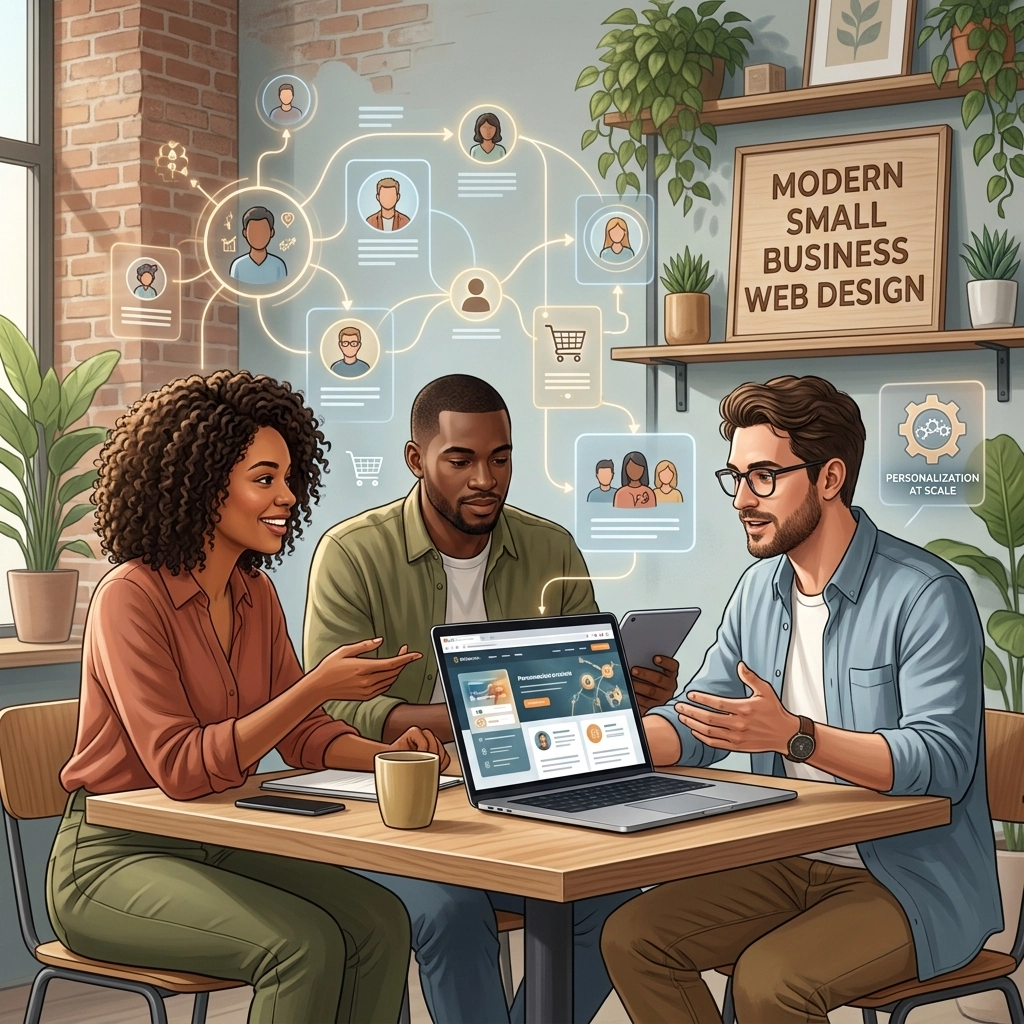
Personalization at scale is the secret sauce that is currently leveling the playing field. It’s no longer about having a static digital brochure; it’s about creating a website design that adapts to the person clicking on it. It’s about making your small business feel as responsive and intuitive as a global enterprise, without losing that local, friendly touch.
The End of the “One-Size-Fits-All” Era
Think of your website as a 24/7 salesperson. If a salesperson treated every single person who walked through the door exactly the same: using the same script, the same tone, and recommending the same product regardless of the customer’s needs: they wouldn’t be very successful. Yet, that is exactly how most small business web design has functioned for the last decade.
When we talk about personalization at scale, we’re talking about moving away from that rigid, static structure. We’re moving toward a world where your site can recognize a returning customer versus a first-time visitor. Imagine a local bakery website that highlights gluten-free options for a user who previously searched for them, or a landscaping site that shows snow removal services to users in cold climates while showing lawn care to those in the south.
This isn’t just “cool” tech; it’s a fundamental shift in how we approach website redesign. We are no longer building for an “average” user. We are building systems that cater to the user.

Why Small Businesses Can (and Should) Care Now
You might be thinking, “Steven, this sounds expensive and complicated. I’m just trying to run my shop.” I hear you. But the truth is that the tools have become incredibly accessible. AI and advanced WordPress website design tools have made it so that you don’t need a team of twenty developers to implement dynamic content.
The gap between what a customer expects and what a small business delivers is where most sales are lost. Research shows that over 70% of consumers expect personalized interactions, and nearly 80% are more likely to return to a business that offers them. If your competitor down the street is offering a tailored experience and you’re still using a static template from 2018, the choice for the customer becomes very easy.
By starting with small, manageable steps: like personalized pop-ups based on the user’s source or dynamic calls-to-action: you can begin to build that loyalty and trust that small businesses are famous for.
Shifting Focus: From Vanity Metrics to ROI
For a long time, the success of web design services was measured by vanity metrics: how many people visited the home page, or how long they stayed there. But traffic doesn’t pay the bills: conversions do.
Personalization at scale forces us to change how we measure success. Instead of just looking at raw numbers, we look at the Return on Investment (ROI). We look at conversion rates, average order values, and customer lifetime value. When a website is personalized, the “right” traffic finds exactly what they need faster. This reduces friction and makes the path to purchase (or a phone call) much shorter.
This shift is why local SEO services are changing, too. It’s not just about getting people to the site; it’s about what happens once they arrive. If your SEO efforts bring a lead to your site, but the site feels generic and unhelpful, that’s a wasted marketing spend.
How to Start Small Without Breaking the Bank
You don’t have to overhaul your entire digital presence overnight. Personalization is a journey, not a destination. Here are a few ways small businesses are starting to implement this in 2026:
- Dynamic Headers: Changing the hero text based on whether the visitor came from a social media ad, a Google search, or a direct link.
- Behavioral Triggers: Offering a specific discount or a helpful guide only after a user has spent a certain amount of time on a service page.
- Segmented Content: If you offer multiple services, you can show different testimonials or case studies depending on which page the user visits first.
- Localized Experiences: Using geo-location to show content relevant to the user’s specific neighborhood or city.
These small tweaks are part of regular website maintenance and can have a massive impact on how professional and “tuned-in” your business appears.

Building Trust Through Privacy-First Design
We can’t talk about personalization without talking about privacy. In 2026, people are more protective of their data than ever. Personalization at scale only works if it’s built on a foundation of trust.
This is where “Privacy-First Design” comes in. You want to show your customers that you value their experience without making them feel like they’re being watched by a “big brother” algorithm. Transparency is key. Your privacy policy should be easy to find and even easier to read.
The best kind of personalization feels like a helpful concierge, not a persistent stalker. It’s about using the data they choose to give you: like their browsing habits on your site: to make their lives easier. When you get this balance right, you’re not just a service provider; you’re a trusted partner.
The Role of SEO in a Personalized World
You might wonder if personalization hurts your search engine rankings. If the content is always changing, how does Google know what your site is about?
Actually, personalization and SEO services for small business go hand-in-hand. Google’s algorithms are increasingly focused on user experience (UX) and “helpfulness.” When a user finds exactly what they need on your site because it was tailored to them, they stay longer and interact more. These “user signals” tell search engines that your site is high-quality, which can actually boost your rankings over time.
Furthermore, using tools like Reviews as SEO Fuel helps bridge the gap. When potential customers see reviews from people in their own area or with similar needs, it reinforces the personalized feeling of your brand before they even click “Contact.”
Is Your Website Ready for the Future?
As we move further into 2026, the gap between “good” websites and “great” ones will continue to widen. A “good” website is a place where information lives. A “great” website is a place where a relationship begins.
If you feel like your current site is a bit of a relic: static, slow, or just plain boring: it might be time for an audit. There are often 5 signs your website is outdated, and the lack of any personalization is a major one.
You don’t need a massive budget to start thinking this way. You just need a shift in mindset. Instead of asking, “What do I want to say to everyone?” start asking, “What does this specific person need to hear right now?”
Final Thoughts
Personalization at scale is the bridge between the high-tech future and the high-touch history of small business. It allows you to keep that personal connection that makes your business special, while using modern tools to reach more people than ever before.
It’s time to stop thinking of your website as a fixed object and start seeing it as a fluid, living part of your team. Whether you are looking for a full website redesign or just some consistent website maintenance to get things up to speed, the goal is the same: making your digital home feel like home for every visitor.
If you’re curious about how these trends can work for your specific niche, feel free to reach out. We’re always here to help you navigate the ever-changing world of web design and SEO. Let’s make sure your website is working just as hard as you are.